

Fillers restore volume the face has lost and define contours it never had — lips, cheeks, jawline, chin and under the eyes. At Al Kindi Clinics Center in Al Sadd, Doha, every filler is planned and injected by our specialist dermatologist Dr. Mahrokh Fotooei. We use reversible hyaluronic acid fillers only, so nothing you decide today is permanent.
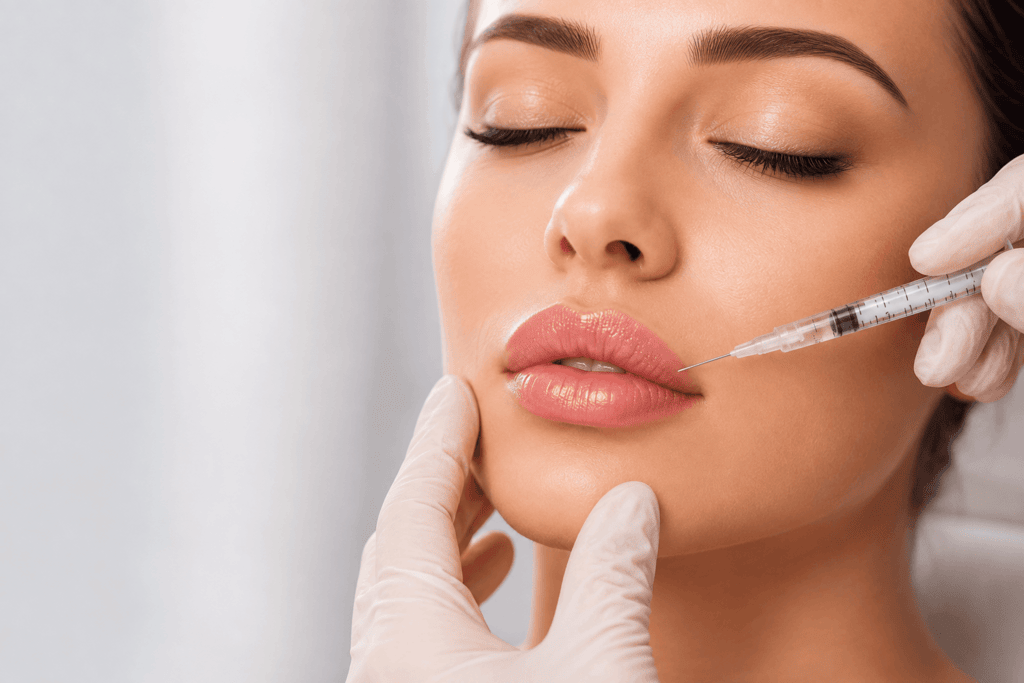
A dermal filler is a soft gel injected under the skin. It sits where volume has been lost and physically supports the tissue above it, so a hollow fills, a crease softens or a contour becomes defined.
That is a completely different job from botox. Botox works on lines caused by movement — the forehead creases when you raise your eyebrows, the frown lines when you concentrate. Fillers work on volume — cheeks that have flattened, under-eyes that have hollowed, lips that have thinned, a jawline that has softened.
Most people arrive asking for one and need the other, or need a little of both. Working out which is the entire purpose of the consultation, and it is why we will not quote you a price over the phone for a face we have not seen.
There are four main families of injectable filler. Knowing the difference matters, because one of them cannot be undone.
A sugar molecule your body already produces and holds water with. Soft, adjustable, and available in different weights for different areas. Lasts six to eighteen months and breaks down naturally. Crucially, it can be dissolved with an enzyme injection if you are unhappy or if a correction is needed.
A firmer, more structural product used for deeper support along the jaw and cheekbones, and it stimulates some collagen of its own. Typically lasts around twelve months. It is not reversible in the same way hyaluronic acid is.
A collagen stimulator rather than a true filler. It does not fill on the day; it prompts your skin to build its own collagen over several months, and the result then lasts longer. Used for gradual, overall volume restoration rather than shaping one feature.
A permanent filler made of tiny plastic microspheres. It cannot be dissolved, and if the result is wrong, or your face changes with age, correcting it means surgery. We do not use permanent fillers, and we would advise you to think hard before letting anyone else.
mention brands
Each area needs a different weight of product. A gel soft enough for under the eye would collapse under a jawline, and a gel firm enough for a jawline would look lumpy under the eye. Matching the product to the area is most of the skill.
Definition, shape and hydration rather than size. Also softens the fine lines above the lip.
Restores the volume that flattens with age. Lifting here often improves the lower face without touching it.
Softens hollows and the shadow they cast. The most technical area on the face — not every dark circle is a hollow.
The smile lines from nose to mouth. Usually treated by supporting the cheek above rather than filling the fold itself.
The lines running from the mouth down toward the chin that can give a permanently downturned look.
Sharpens and defines a soft or blurred jaw. The most requested area among our male patients.
Projects a receding chin and balances the profile. Often changes a face more than lips would.
Non-surgical reshaping to smooth a bump or lift the tip. Requires an experienced injector — this area carries real risk.
Hollow temples age a face quietly. Hands show volume loss earlier than most people expect.
Most people do not come in asking for a millilitre of gel. They come in because their face looks rounder than it used to, or flatter, or heavier at the bottom than the top — and they want to know if anything can be done about the shape.
It can, within limits. Adding structure high on the face — cheekbones, temples, the outer jaw — makes a round face read as more oval, because you are lengthening and lifting rather than widening. Defining the chin and jaw balances a face that feels heavy in the lower third. The work is about restoring proportion between the thirds of the face, not about making any one part bigger.
What it cannot do is change your bone structure. Filler sits on top of what is already there. If someone promises to give you a completely different face shape with a syringe, they are selling you something that will end up looking like exactly that.
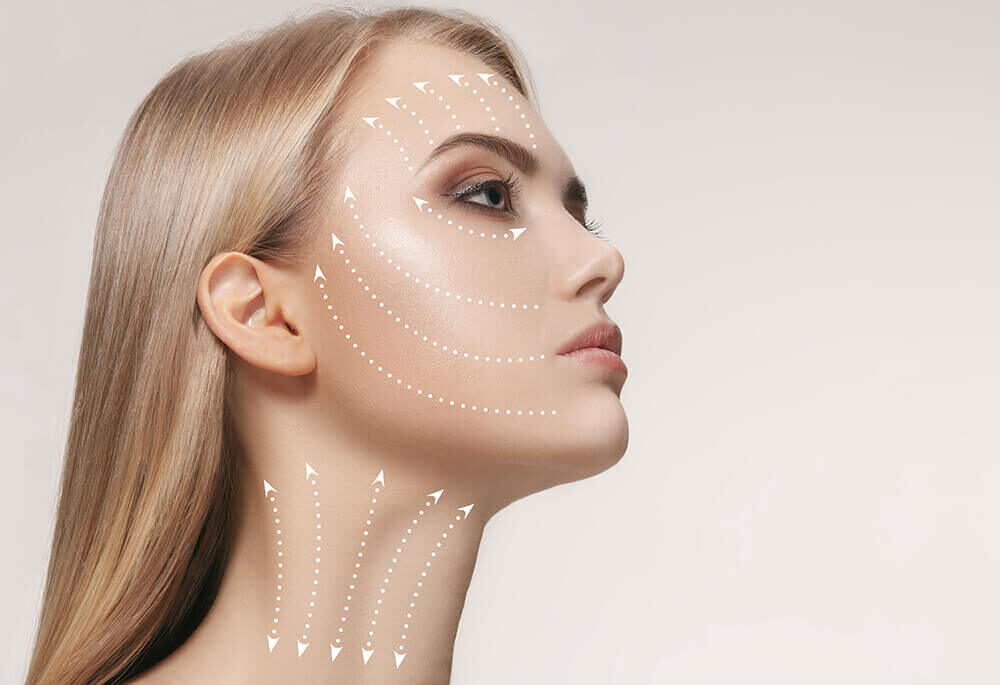
This is what almost everyone is actually thinking, and very few people say out loud. Nobody wants pillow cheeks, duck lips, or a face that looks worked on. So it is worth being clear about how that happens — because it is not what fillers do, it is what over-filling does.
Overdone results come from three things. Treating one area in isolation, so the lips get bigger while nothing around them supports the change. Topping up repeatedly without ever reviewing the whole face, so volume accumulates over years without anyone standing back. And chasing a look from a photograph of somebody with different bones.
How we work instead. We assess your whole face, not the area you came in about. We start with less than the maximum and review you at two weeks — adding is easy, and it is the only way to see how a filler settles before deciding it needs more. And we will tell you when the honest answer is that you have had enough.
Russian lips and similar techniques are options we can discuss, not fashions we will talk you into. They suit some lip shapes and look wrong on others.
And if you ever dislike a result, hyaluronic acid filler can be dissolved. That safety net is the single strongest reason we do not use permanent products.
Filler needles and cannulas are larger than the ones used for botox, so bruising is more likely — that is true for everyone. What is less often mentioned is what happens afterwards on melanin-rich skin.
In Fitzpatrick types IV to VI, the skin can respond to that small injury by producing extra pigment, leaving a faint dark mark at the injection point that lingers after the bruise itself has gone. It is not dangerous and it does fade, but it can take weeks you did not plan for — particularly around the lips and under the eyes.
We reduce the risk in practical ways: a cannula instead of a needle where the area allows, fewer entry points, ice before and after, and clear sun protection instructions. Tell Dr. Mahrokh if you bruise easily or have marked after injections before, and she will plan the technique around it.
What happens
Dr. Mahrokh assesses your whole face — proportions, where volume has gone, what is causing what you dislike. She marks the plan, chooses the product weight for each area, and tells you the cost before anything is opened.
Numbing cream first, and most fillers contain lidocaine so the area numbs further as it goes in. Depending on the area we use a fine needle or a blunt cannula. Fifteen to forty minutes, and you see the result in the mirror before you leave.
Filler needs two weeks to settle, so this is when we look properly. If an area needs a small addition, we do it then. The review is part of your treatment, not a separate appointment.
Recovery
Immediate visible change, plus some swelling
Peak swelling, most noticeable in lips
Any bruising fades. Makeup covers it
Settled. This is your real result — and your review
Do not judge your face in the first week. Lips in particular look considerably fuller for two or three days than they will at two weeks, and every year people panic on day two about a result that is perfectly good by day fourteen. If you have an event, book at least three weeks ahead — longer than botox needs, because swelling and bruising need room.
Side effects
Carbon laser is one of the mildest laser treatments available, and most people have nothing to report beyond looking a little flushed. But no clinic should tell you a laser has no side effects at all, so here is the full picture.
Common and short-lived: mild redness for one to three hours, a warm or tingling feeling during the treatment, and slight tightness that settles by the evening.
Uncommon: a small area of temporary darkening, which is almost always caused by sun exposure in the days afterwards rather than by the laser itself. This is the reason we are strict about sunscreen. It fades, but it takes weeks you did not need to spend.
Rare: blistering or a lasting mark. This is a settings problem, not a treatment problem, which is why it matters who is holding the laser and whether your skin type was assessed first.
Fillers are priced by the millilitre and by the product used, so the cost of your treatment depends on which areas you are treating, how much each needs, and which weight of filler is right for that area. A single lip treatment and a full jawline are not comparable.
We do not quote a fixed figure before seeing you, because a price given over the phone for a face nobody has looked at is a guess. What we do commit to is this: Dr. Mahrokh assesses you, explains what she recommends and what she does not, and gives you the complete cost before anything is opened. The two-week review is included. There is no pressure to treat on the same day.
For an estimate before you come in, message us on WhatsApp with the areas you are considering and we will give you a realistic range.
They treat different problems. Botox relaxes the muscles that crease your skin when you move, so it works on forehead lines, frown lines and crow’s feet. Fillers add volume under the skin, so they work on hollow cheeks, thin lips, under-eye hollows and an undefined jawline. Many patients at our Doha clinic have both, because most faces show a mix of movement lines and volume loss.
Hyaluronic acid fillers last six to eighteen months depending on the area and the product. Lips move constantly and metabolise filler faster, so they usually need refreshing sooner than cheeks or a jawline. Your first treatment often lasts slightly less than the ones after it.
Lips are the most sensitive area we treat, so we always use numbing cream first, and the fillers we use contain lidocaine that numbs further as it goes in. Most patients describe pressure rather than sharp pain. The treatment itself takes about fifteen minutes at our Al Sadd clinic.
Not if the amount and the placement are right. A plastic look comes from over-filling, from treating one feature without balancing the face around it, and from topping up repeatedly without anyone reviewing the whole. We start with less than the maximum, review you at two weeks, and add only if it is genuinely needed. You should look rested, not treated.
Yes, if they are hyaluronic acid — an enzyme called hyaluronidase breaks them down, usually within a day or two. This is one of the main reasons we use only hyaluronic acid fillers at Al Kindi Clinics Center. We also assess and dissolve filler placed elsewhere, so if you are unhappy with work done at another clinic in Doha, come and talk to us.
It can be excellent, but it is the most technical area on the face and needs an experienced injector. It also is not right for everyone — not every dark circle is a hollow. Some are pigmentation and some are shadow from loose skin, and filler will not improve either. Dr. Mahrokh will tell you which you have before suggesting treatment.
Yes, and it is a growing part of our practice. Men most often ask about the jawline and chin, where filler sharpens definition rather than adding softness, and the technique is different from what suits a female face. Male appointment times can be arranged on request.
We do not treat during pregnancy or breastfeeding. There is no strong evidence of harm, but there is also no good research showing safety, and no cosmetic result is worth an unknown. Tell Dr. Mahrokh at the consultation and she will suggest what is safe to do in the meantime.
Better not to fly for 48 hours if you can avoid it. Cabin pressure and dehydration can make swelling more noticeable, and if you did need to be seen for anything you would rather be in Doha than in the air. If you are travelling for an event, plan the treatment three weeks ahead.

Specialist Dermatologist · MBBS, MD (Dermatology).
QCHP licensed. 15 years' experience
Dr. Mahrokh Fotooei treats skin at Al Kindi Clinics Center in Doha, with a focused practice in injectable aesthetics, non-surgical facelifting and laser skin rejuvenation.
Patients consistently describe her as someone who explains each step before it happens — which matters more than it sounds when you are deciding whether to have a procedure at all.