

Also called the Hollywood Peel, the carbon laser facial lifts oil and clogged pores, calms acne and brightens dull, uneven skin. At Al Kindi Clinics Center in Al Sadd, Doha, it is performed by our specialist dermatologist Dr. Mahrokh Fotooei — and you leave with brighter skin the same afternoon.
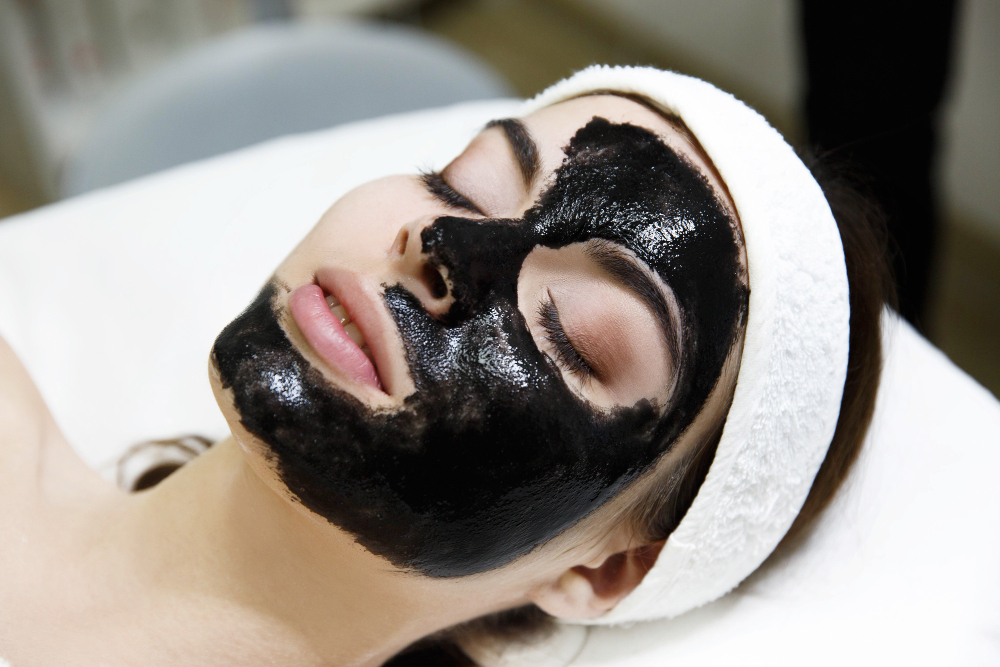
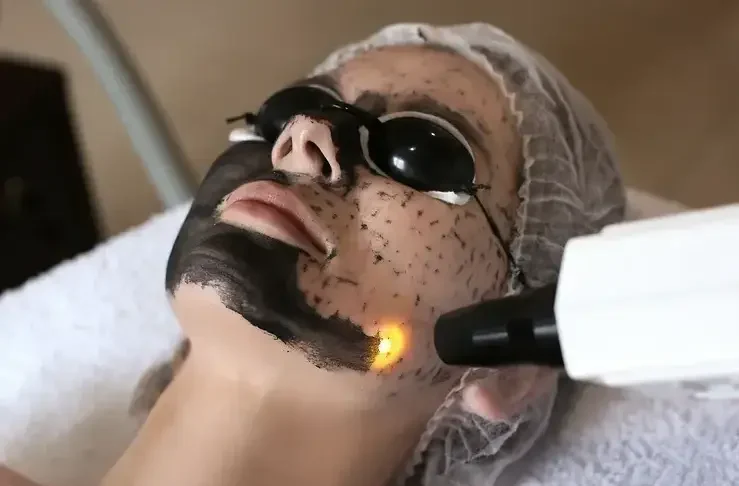
A thin layer of medical liquid carbon is spread over your skin and left to settle into the pores. Carbon is very good at absorbing laser light, so when the laser passes over the area it targets those carbon particles and vaporises them. Everything the carbon has drawn in — oil, dead skin, debris, the bacteria that feed acne — lifts away with it.
The heat also reaches the deeper layer of the skin and prompts it to produce more collagen, which is why tone and texture keep improving over a course of sessions rather than only on the day.
The word “peel” confuses people. Nothing is burned and your skin does not flake off afterwards, as it would with a chemical peel. The only thing being peeled away is the carbon.
We perform carbon laser at Al Kindi Clinics Center using the PicoTech Nd:YAG laser. The carbon peel runs on its 1064 nm wavelength — the one that carbon absorbs most strongly — which is why the energy goes into the carbon particles rather than into your skin. The same platform also delivers our pico laser treatments for pigmentation and tattoo removal, using different settings and a different wavelength.
It is one of the most useful treatments we have for skin that looks tired, congested or uneven — and one of the gentlest.
Draws oil and debris out of the pores and reduces how much the skin produces, so pores look tighter.
Clears congestion and reduces the bacteria that drive breakouts. Useful for active acne on the face, back and chest.
Lifts the layer of dead cells that makes skin look grey. This is the effect people notice on the same day.
Breaks down excess pigment so dark patches fade and overall tone evens out over a course.
The collagen response softens fine lines and smooths rough texture gradually across several sessions.
A wedding, Eid, a photograph. Book three to five days ahead so the skin has settled.
What it will not do. Carbon laser will not clear deep or pitted acne scars, and it will not resolve stubborn melasma on its own — those usually need pico laser, fractional laser or a combined plan. If that is what you have, Dr. Mahrokh will tell you at the consultation rather than sell you a course that cannot work.
Most people book carbon laser for the face, but the areas patients ask about most often are elsewhere — and they are areas where darkening is extremely common and rarely talked about.
Skin darkens in these places for ordinary reasons: friction from clothing, shaving and waxing, sweat and heat, deodorants, and repeated rubbing. Carbon laser breaks down that built-up pigment and evens the tone over a course of sessions.
Hair must be removed from any body area before treatment, so if you are also having laser hair removal, we will usually sequence the two together.
Most brightening and resurfacing treatments carry a real risk on melanin-rich skin. Anything that injures the skin deeply can trigger post-inflammatory hyperpigmentation — the treatment meant to lighten a patch ends up darkening it instead. That is why so many people with Fitzpatrick IV to VI skin have had a bad experience with a laser somewhere.
Carbon laser is different because it is superficial and non-ablative. It works on the surface and with gentle heat rather than by removing layers of skin, which makes it one of the safer brightening options for the skin types we see most at our Doha clinic.
That safety still depends on the settings. Energy that is fine on lighter skin can be too much on darker skin, and the number of passes matters. Dr. Mahrokh assesses your skin type before the first session and starts conservatively.
What happens
Your skin is cleansed and a thin layer of liquid carbon is applied, then left for a few minutes to settle into the pores. You wear protective eye shields for the whole treatment.
The first pass warms the skin and works on pigment and collagen. The second removes the carbon along with the oil and dead skin it has absorbed. It feels warm with a light snapping sensation — most patients find it comfortable.
A calming serum and sunscreen are applied. You may be slightly pink for an hour or two. You can wear makeup that evening and go back to normal straight away.
Results
Skin looks brighter and cleaner as soon as you leave
How long the glow from a single session holds
Spaced 2–3 weeks apart for acne or pigmentation
Maintenance once you have the result you want
One session is a very good facial. It is not a cure. Real change to acne, congestion or pigmentation comes from a course, because each session builds on the last and the collagen response takes weeks to show. How long your results hold afterwards depends mostly on two things: daily sunscreen, and whether the original cause — oily skin, sun exposure, friction — is still there.
Side effects
Carbon laser is one of the mildest laser treatments available, and most people have nothing to report beyond looking a little flushed. But no clinic should tell you a laser has no side effects at all, so here is the full picture.
Common and short-lived: mild redness for one to three hours, a warm or tingling feeling during the treatment, and slight tightness that settles by the evening.
Uncommon: a small area of temporary darkening, which is almost always caused by sun exposure in the days afterwards rather than by the laser itself. This is the reason we are strict about sunscreen. It fades, but it takes weeks you did not need to spend.
Rare: blistering or a lasting mark. This is a settings problem, not a treatment problem, which is why it matters who is holding the laser and whether your skin type was assessed first.
Simple, and it decides how good your result looks in two weeks.
Not in the way people usually mean. Carbon laser breaks down excess pigment, so dark patches fade and your tone looks more even and brighter. It does not change your natural skin colour, and any clinic promising that is overselling it. What most of our patients in Doha notice is that the unevenness goes — not that they became a different shade.
Yes, and it is one of the better options for Fitzpatrick IV to VI skin because it works on the surface rather than removing layers. The safety comes from the settings, not the machine alone. At Al Kindi Clinics Center in Al Sadd, Doha, Dr. Mahrokh assesses your skin type first and starts with conservative energy rather than a standard setting.
No. The name is misleading. Nothing flakes or sheds the way it does after a chemical peel — the only thing peeled away is the carbon layer, and that comes off during the treatment itself. You may be slightly pink for an hour or two afterwards, and that is all.
It depends on the area treated and how many sessions your skin needs, so we do not quote a single figure. A face is priced differently from a back, and a one-off session before an event is not the same as a course for acne. Message us on WhatsApp with the area and the concern and we will give you a realistic range before you come in.
For a glow before an event, one session is enough. For acne, congestion or pigmentation, expect four to six sessions spaced two to three weeks apart, then maintenance every four to six weeks. Dr. Mahrokh sets the number after seeing your skin — it is not a fixed package.
Yes. Underarms, inner thighs, knees, elbows and the neck are among the most requested areas at our Doha clinic, where skin often darkens from friction, shaving and heat. The area needs to be free of hair before treatment, so if you are also having laser hair removal we will plan the two together.
We do not treat during pregnancy or breastfeeding. There is no strong evidence of harm, but pregnancy changes how skin responds to laser and makes pigmentation less predictable, so the sensible course is to wait. Tell Dr. Mahrokh at the consultation and she will suggest what is safe in the meantime.
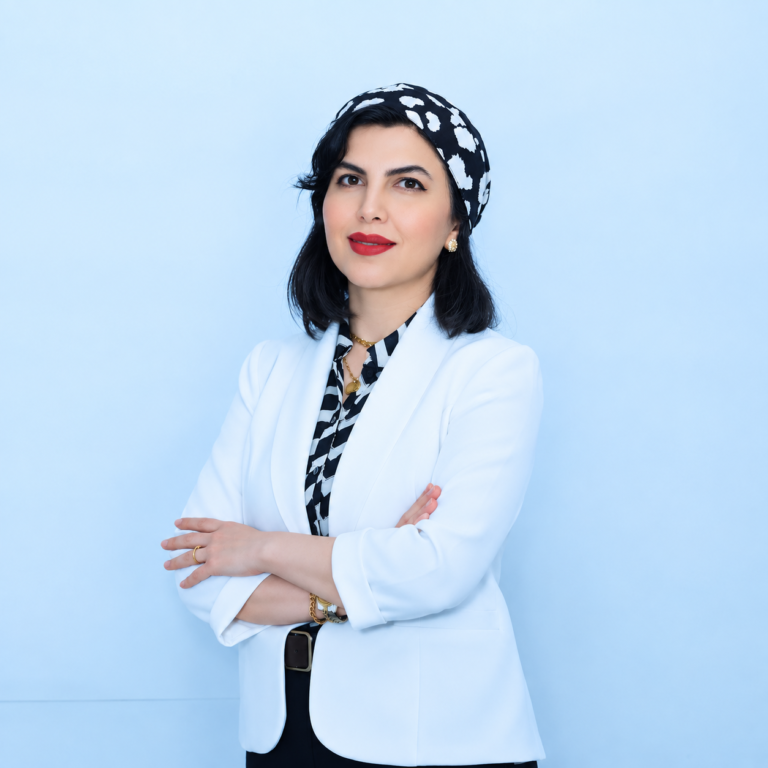
Specialist Dermatologist · MBBS, MD (Dermatology).
QCHP licensed. 15 years' experience
Dr. Mahrokh Fotooei treats skin at Al Kindi Clinics Center in Doha, with a focused practice in injectable aesthetics, non-surgical facelifting and laser skin rejuvenation.
Patients consistently describe her as someone who explains each step before it happens — which matters more than it sounds when you are deciding whether to have a procedure at all.