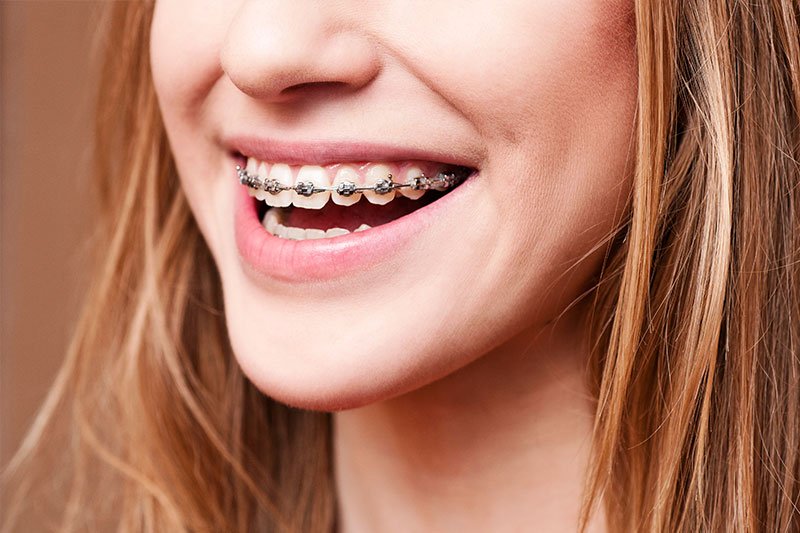
Straighten crowded or gapped teeth and fix your bite at Al Kindi Clinics Center in Al Sadd. Metal, ceramic, self-ligating and lingual braces, and Invisalign clear aligners, planned on a 3D scan by specialist orthodontist Dr. Ferin Fathima.
| Where | Al Kindi Clinics Center, Building 73, Street 808, Zone 39, Al Sadd, Doha |
| Orthodontists | Dr. Ferin Fathima, Specialist Orthodontist (MDS, 500+ cases, Invisalign Gold provider), and Dr. Mohamed Nizam, Orthodontist (speaks Arabic, English, Hindi, Tamil and Malayalam) |
| Types of braces | Metal, ceramic, self-ligating and lingual braces, and Invisalign / clear aligners |
| Planning | X-rays, a 3D (CBCT) scan and a 3D digital plan, so you see the expected result before you start |
| Typical length | 12 to 24 months for most cases |
| Ages | Children, teens and adults |
| After braces | Retainers to keep teeth straight: clear (Essix) or fixed |
| Also available | Mini implants for complex cases, night guards and sports guards |
| Insurance | We accept dental insurance, including Al Koot and QLM and check what your plan covers |
| Opening hours | Daily 9 am – 9 pm; dental Friday 2 pm – 9 pm |
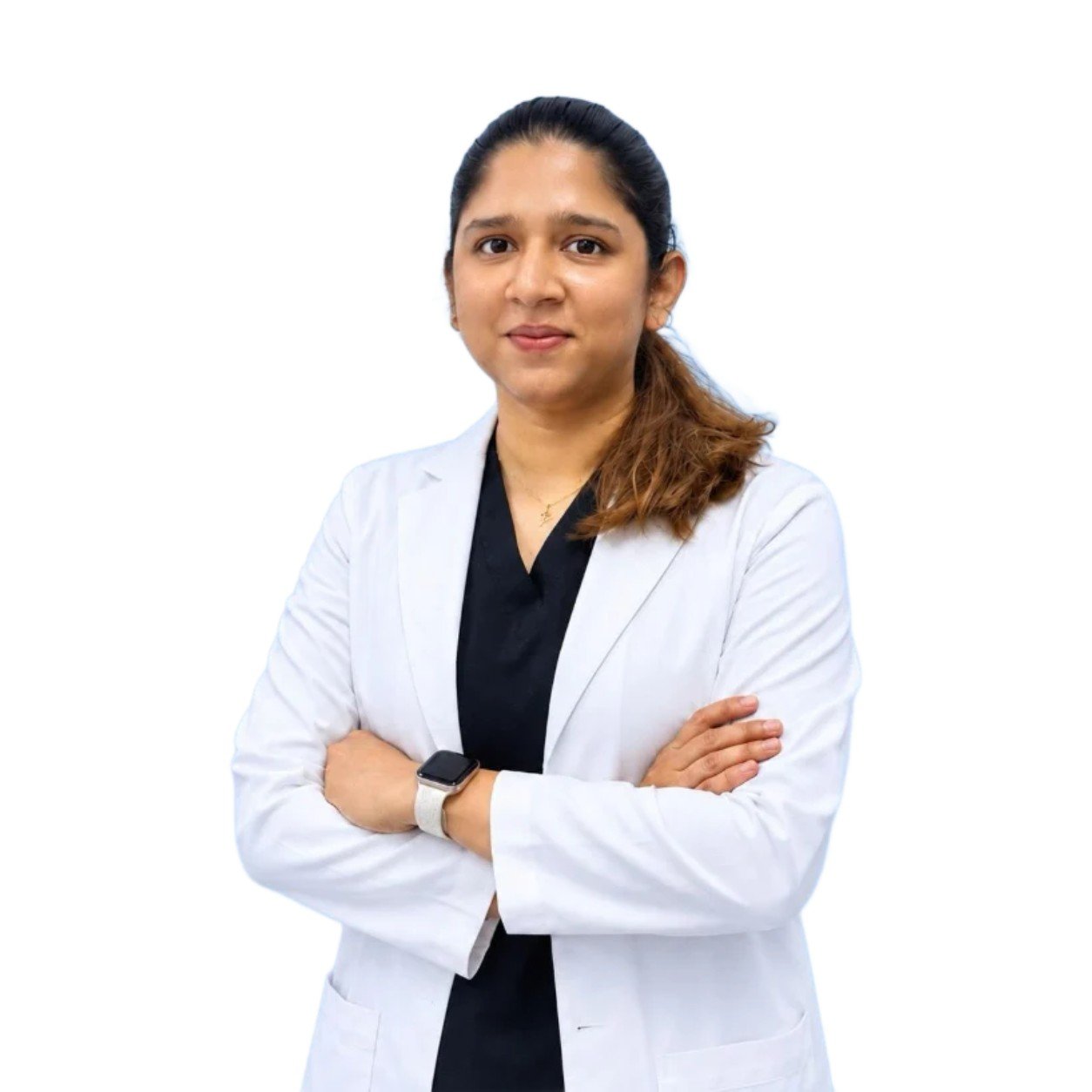
Dr. Ferin Fathima holds an MDS in Orthodontics and has planned and completed more than 500 orthodontic cases: metal and ceramic braces, Invisalign, surgical orthodontics and early treatment for children. She reached Invisalign Gold provider level from Bronze within one year.
Every case starts with a 3D (CBCT) scan and a 3D digital plan, so you see the expected result before treatment begins.
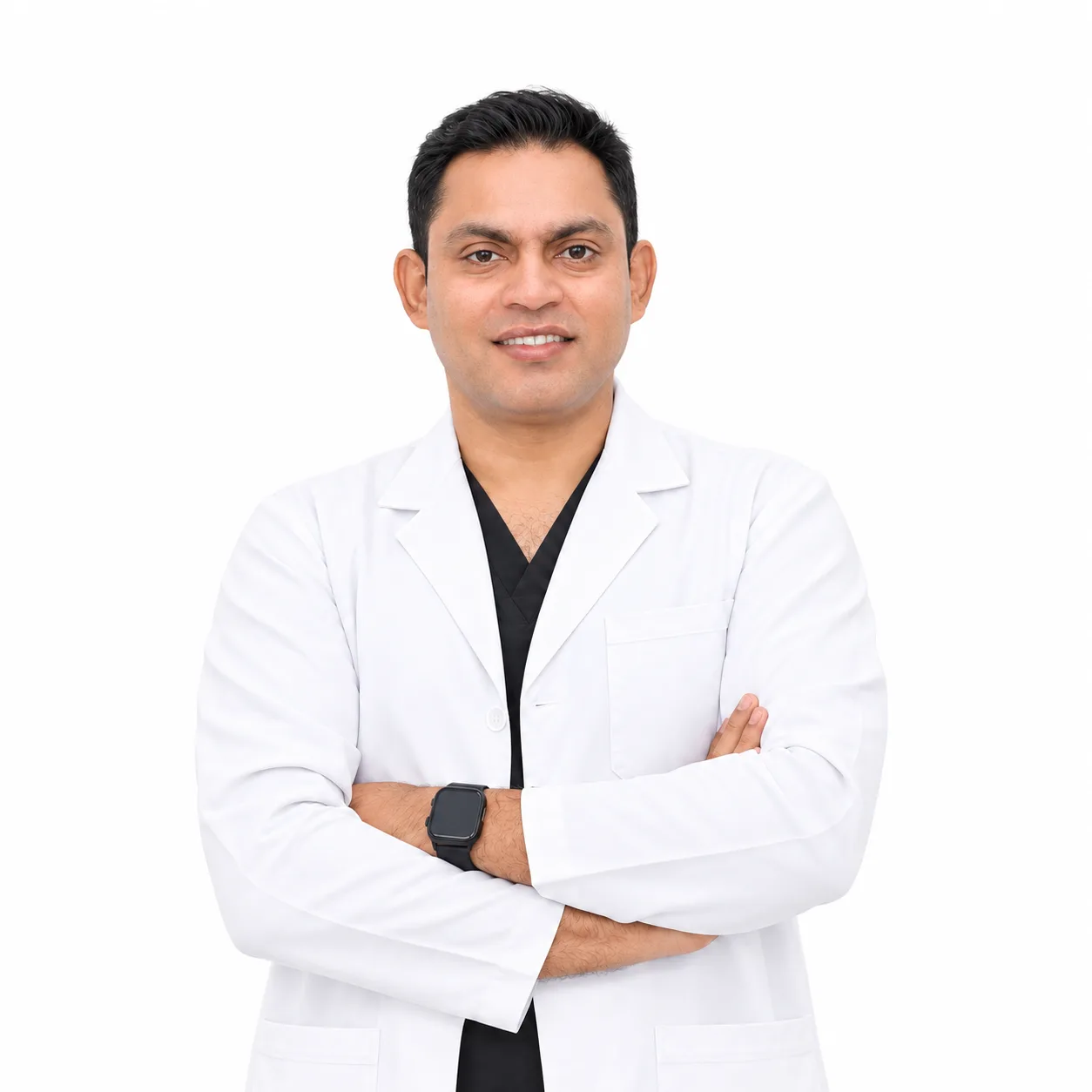
Dr. Mohamed Nizam treats children, teenagers and adults with metal, ceramic and self-ligating braces and clear aligners. He explains each option in simple words, so you know the choice, the usual treatment time and the cost before you start.
Patients can talk to him in Arabic, English, Hindi, Tamil or Malayalam.
There are five main ways to straighten teeth. Your orthodontist checks your teeth and bite, then explains which options suit you and what each one costs.
Stainless steel brackets and a wire. The strongest and lowest-cost option, and it works for almost every case.
Tooth-coloured brackets that blend in with your teeth. They work like metal braces but are much harder to see.
Brackets with a built-in clip that holds the wire, so no elastic ties are needed and adjustments are often fewer.
Fixed behind the teeth, so they cannot be seen from the front. They take longer to get used to, especially for speech.
A series of clear, removable trays worn about 20 to 22 hours a day. You take them out to eat and brush. Dr. Ferin Fathima is an Invisalign Gold provider.
Colour ties: with metal braces, the small elastic ties can come in colours such as blue, pink, purple, red or silver, and you can change them at each visit. Ask us which colours are available.
The price of braces depends on the type you choose and how much your teeth need to move. Metal braces cost the least. Your orthodontist gives you the full cost after your 3D plan, before treatment starts.
Relative cost of each type. Your exact price is confirmed after your 3D plan.
The type of braces, how long treatment takes, how complex your bite is, and the retainers you need afterwards.
We accept dental insurance, including Al Koot and QLM. Many plans limit orthodontic cover, so send us your details and we will check.
You get the complete price for your case after the 3D plan, so there are no surprises later.
Braces are not only about looks. Straight teeth are easier to clean, wear more evenly and can make your bite more comfortable.
Not enough space, so teeth overlap or twist. Crowded teeth are harder to clean and collect more plaque.
Spaces between teeth, including a gap between the two front teeth (diastema). Braces close the gaps.
The upper front teeth cover the lower teeth too much. In severe cases it wears the teeth and can hurt the gum behind them.
The lower teeth sit in front of the upper teeth. It can make chewing harder and affect the shape of the face.
Some upper teeth sit inside the lower teeth. It can wear teeth unevenly and push the jaw to one side.
The front teeth do not meet when you bite, which makes biting food difficult.
Front teeth that stick out are more likely to chip or break in a fall.
Your orthodontist checks your bite and explains what needs fixing.
Book a check-upBraces move teeth with gentle, steady pressure over time. Each part has its own job.
Small metal or ceramic squares fixed to each tooth. They hold the wire.
The wire that runs through the brackets. It is changed or adjusted every few weeks to guide the teeth.
Metal rings fitted around the back teeth to anchor the braces.
Small elastic ties hold the wire in each bracket. Rubber bands between the jaws correct the bite.
A chain of joined elastic rings closes gaps; small springs open space where teeth are crowded.
There is no upper age limit for braces. What matters is healthy teeth and gums.
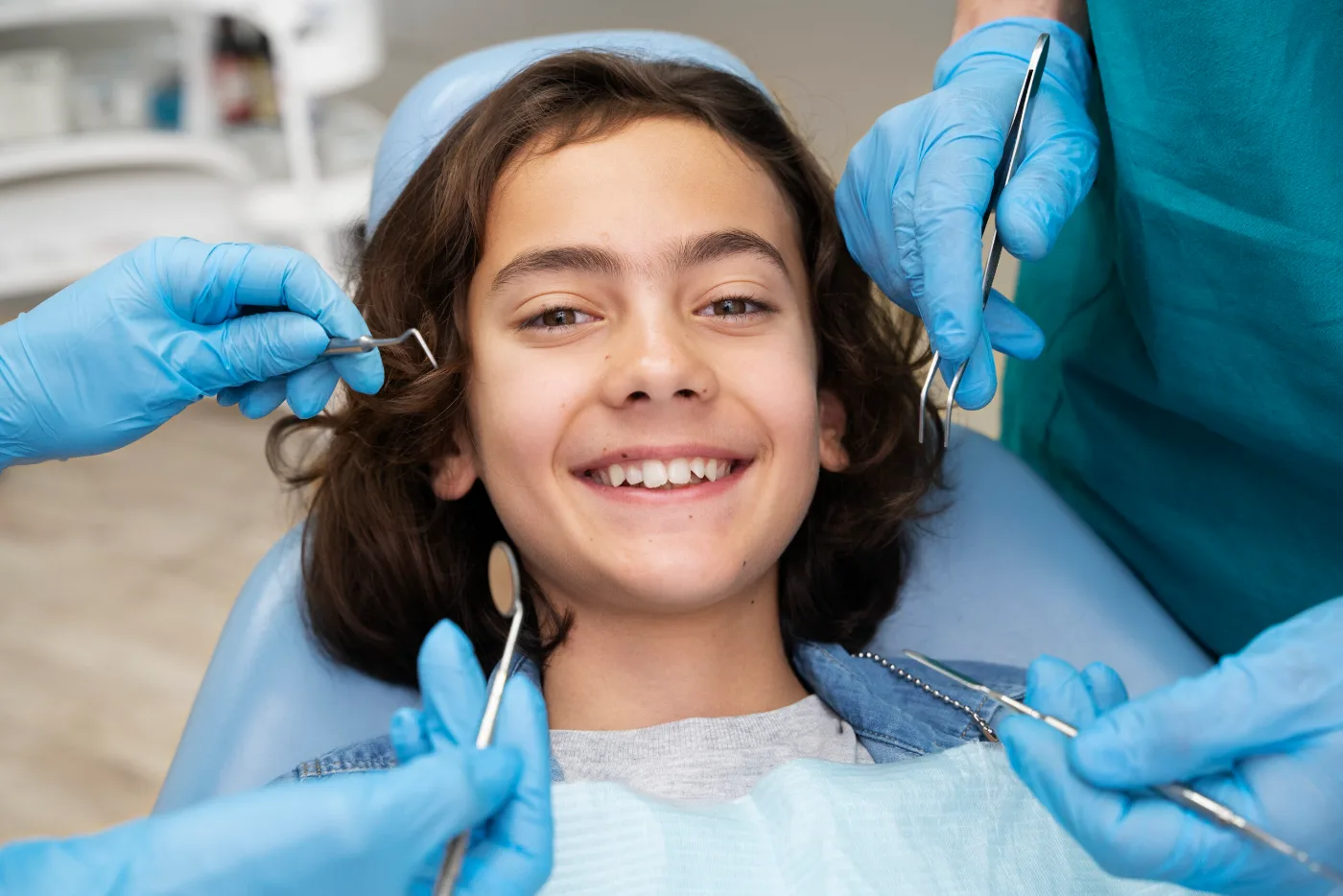 From age 7
An orthodontic check around age 7 can spot problems early. Some children need early treatment while the jaw is still growing; most start full braces later.
 Most common
The most common time for braces, usually once most adult teeth are in. Teens can choose fun colour ties or a clear option.
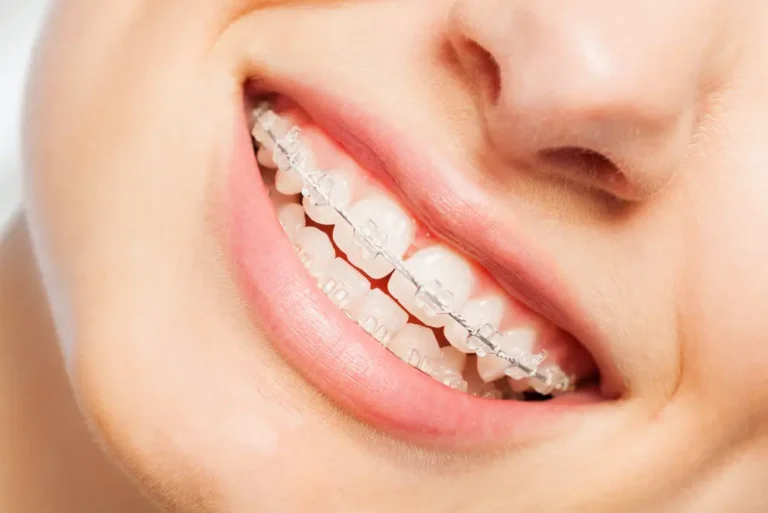 Any age
Adults can straighten their teeth at any age. Many choose options that are harder to see. Any gum disease is treated first.
Most braces treatment takes 12 to 24 months. Mild cases can be quicker; complex bites take longer.
Treatment time depends on how far your teeth need to move, and on wearing elastics or aligners as instructed.
Your own timeline is confirmed once your 3D plan is ready.
Braces need a little extra care. These simple habits keep your teeth healthy and your treatment on time.
Both straighten teeth well. The right choice depends on your bite, how much you mind the treatment being seen, and whether you will wear removable trays most of the day.
Want the full picture? Read our guide to clear aligners in Doha, with costs, what they can fix and how treatment works.
| Fixed braces | Invisalign / clear aligners | |
|---|---|---|
| How it looks | Visible (ceramic and lingual much less so) | Almost invisible |
| Removable | No, fixed for the whole treatment | Yes, out to eat and brush |
| Wear time | All the time | About 20–22 hours a day |
| Eating | Avoid hard and sticky food | Eat normally with the trays out |
| Cleaning | Brush around brackets and wire | Brush teeth and trays as normal |
| Visits | Every few weeks for adjustments | Every few weeks for new trays and checks |
| Best for | Every case, including complex bites | Mild to moderate cases and adults who want discreet treatment |
| Cost | Metal braces cost the least | Usually more than metal braces |
It depends on the type and how long treatment takes. Metal braces cost the least; ceramic and lingual braces and Invisalign cost more. At Al Kindi Clinics Center in Al Sadd, metal braces are QAR 2,999 instead of QAR 18,000 under our current offer, valid until 7 February 2027. You get the full cost for your case before treatment starts.
Most cases take 12 to 24 months. Mild crowding can be quicker; complex bite problems can take longer. Your orthodontist gives you your own estimate once your 3D plan is ready.
Fitting braces does not hurt and needs no injection. Your teeth feel sore for a few days after fitting and after each adjustment. Soft food helps, and orthodontic wax stops brackets rubbing.
Most people have braces as teenagers, once most adult teeth are in. An orthodontic check around age 7 can spot problems early. Adults can have braces at any age as long as their teeth and gums are healthy.
Yes. There is no upper age limit. Many adults choose ceramic braces, lingual braces or Invisalign because they are harder to see. Any gum disease is treated first.
Both work well. Fixed braces suit every case, including complex bites, and metal braces cost the least. Invisalign is almost invisible and removable, but you must wear the trays about 20 to 22 hours a day. Dr. Ferin Fathima will tell you which suits your teeth.
Dr. Ferin Fathima, a specialist orthodontist with an MDS in Orthodontics and Invisalign Gold provider status, and Dr. Mohamed Nizam, an orthodontist who speaks Arabic, English, Hindi, Tamil and Malayalam. Both see children, teenagers and adults at Al Kindi Clinics Center in Al Sadd.
Yes. Dr. Ferin Fathima, our specialist orthodontist at Al Kindi Clinics Center in Al Sadd, is an Invisalign Gold provider. Your treatment is planned on a 3D scan, so you see the expected result before you start.
Metal braces, ceramic (clear) braces, self-ligating braces, lingual braces behind the teeth, and Invisalign / clear aligners. We also provide mini implants for complex cases, Essix retainers, night guards and sports guards.
Soft foods are easiest, especially in the first days. Avoid hard and sticky food such as nuts, ice, toffee, chewing gum and hard bread, and cut fruit like apples into small pieces.
Yes. Teeth try to move back after braces. A clear (Essix) or fixed retainer keeps them straight. Your orthodontist tells you how long to wear it each day.
Usually every few weeks, so the wire can be adjusted or you can collect new aligners. Each visit is short.
With metal braces, the small elastic ties can be coloured, and you can change the colour at each visit. Ask us which colours are available.
Cover the area with orthodontic wax and call us on 5560 5561. We will see you to fix it. It is not usually an emergency.
Most people speak normally within a few days. Lingual braces and aligners can cause a slight lisp at first, which usually settles quickly.
It depends on your plan. Many plans limit or exclude orthodontic treatment. We accept dental insurance, including Al Koot and QLM, so send us your details and we will check what your plan covers.
Your orthodontist examines your teeth, bite and gums, takes the x-rays and 3D scan needed, explains the options that suit you and gives you the time and cost before you decide.
Al Kindi Clinics Center, Building 73, Street 808, Zone 39, Al Sadd, Doha. Open daily 9 am – 9 pm; dental Friday 2 pm – 9 pm.
Explore more dental treatments