Replace a missing tooth with a permanent, fixed dental implant: an Osstem titanium implant topped with a zirconia crown. At Al Kindi Clinics Center in Al Sadd, every case is planned on a 3D scan and placed by Dr. Abdulkarim Faiz, who has placed over 900 implants.
| Where | Al Kindi Clinics Center, Building 73, Street 808, Zone 39, Al Sadd, Doha |
| Treating dentist | Dr. Abdulkarim Faiz, General Dentist — 11 years placing implants, over 900 cases |
| Implant training | Certified in implantology by the German Board in Implantology |
| Implant system | Osstem titanium implants |
| Imaging | Panoramic x-ray and 3D (CBCT) scan, done at the clinic |
| Implant type | Single-tooth implants, front and back teeth |
| Crown | Zirconia: tooth-coloured, strong and metal-free |
| Same-day implants | Available in suitable cases |
| What the price covers | The implant, the abutment and the zirconia crown |
| Payment | Four instalments |
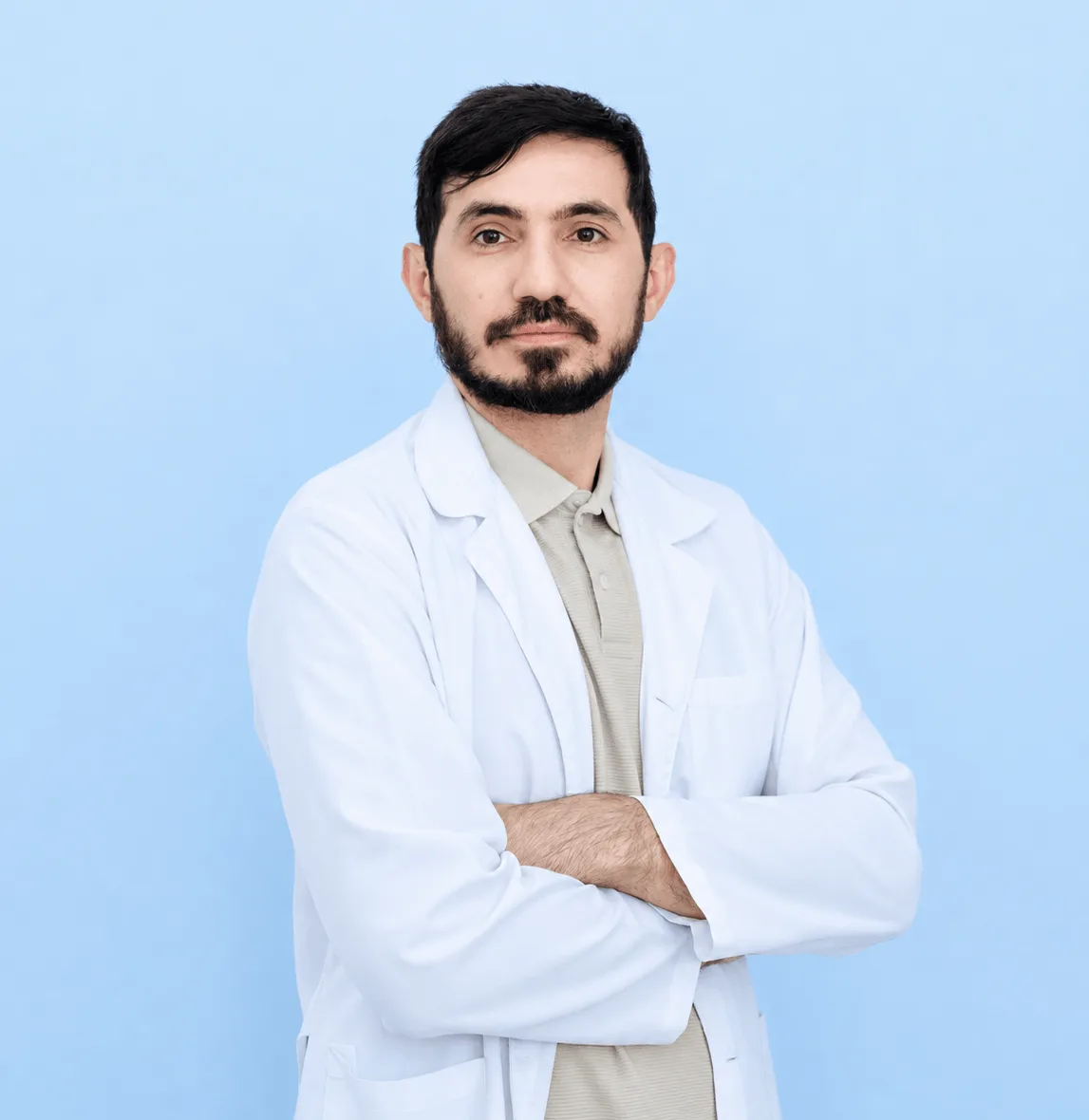
Dr. Abdulkarim has been placing dental implants for 11 years and has completed more than 900 implant cases. He has trained on five implant systems — Osstem, Biohorizons, B&B Dental, ISY and Warantec — and the implants he places at Al Kindi are Osstem.
He places the implant and fits the crown himself, so one dentist sees your case through from the first examination to the finished tooth.
A dental implant is a permanent replacement for a missing tooth. It has three parts, fitted in stages, and knowing which is which makes every quote much easier to compare.
A small titanium screw (we use Osstem) placed into the jawbone where the tooth root used to be. Over about three months the bone grows against it and holds it firm. This is called osseointegration.
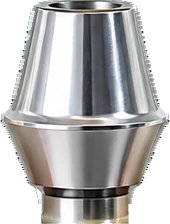
The connector that sits on top of the implant and comes through the gum. You never see it once the tooth is finished.
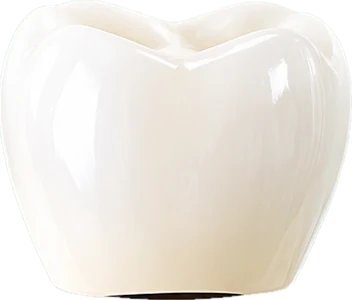
The visible tooth. At Al Kindi it is a zirconia crown: strong, metal-free and matched to the colour and shape of the teeth beside it. It is fixed in place, so you never take it out.
How an implant works
Scroll down to watch the implant, the abutment and the crown go in, one by one.
A small titanium screw is placed in the jawbone, where the tooth root used to be. The bone heals around it and holds it firmly.
A small connector is fixed on top of the implant. It comes up through the gum and holds the new tooth.
A zirconia crown, made to match your other teeth, is fixed on the abutment. You can chew and smile as normal.
 Titanium implantImplant
Abutment
Zirconia crownCrown
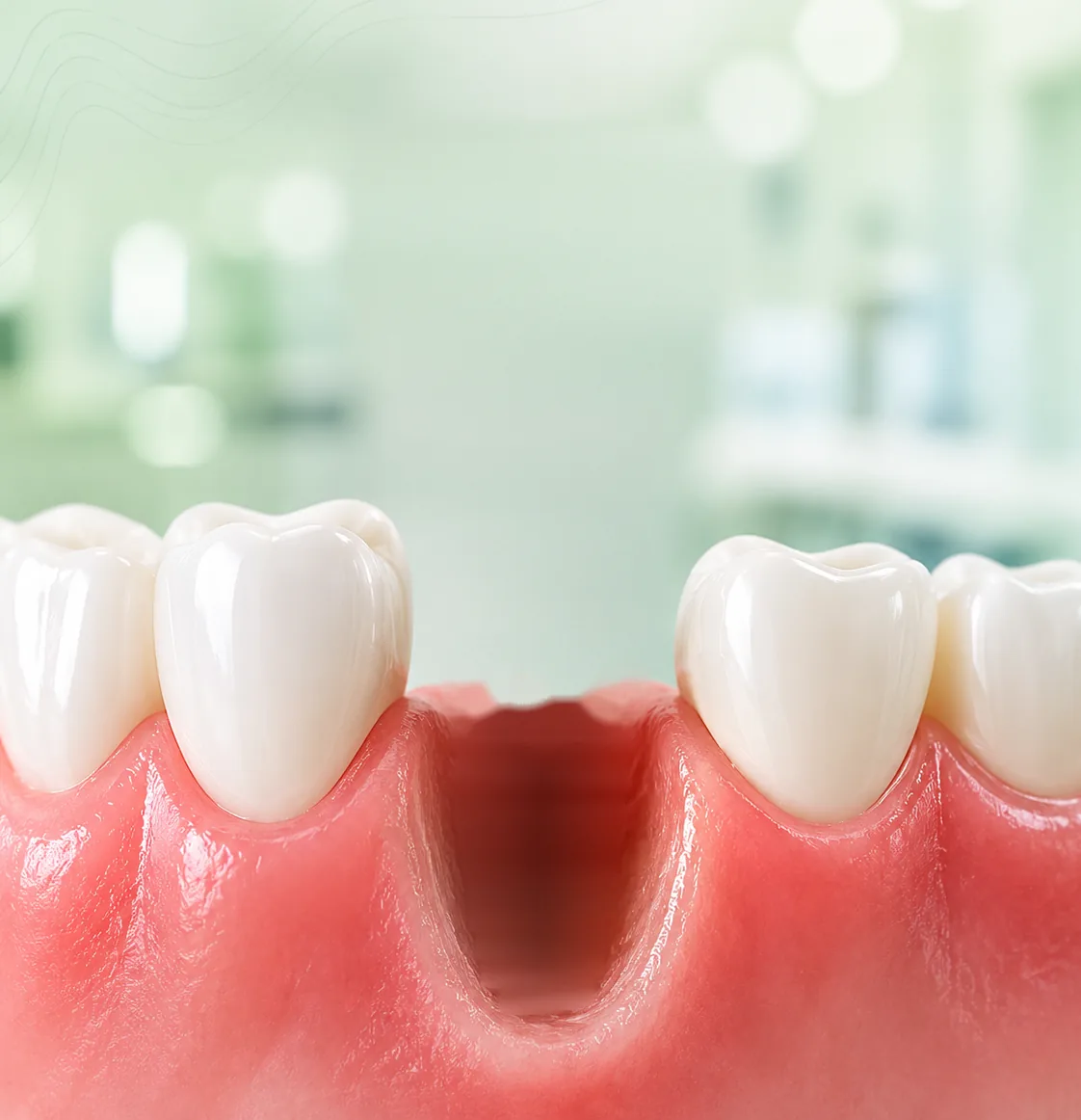
One implant replaces the root and one crown replaces the tooth. This single tooth implant is the most common case we see: a tooth already lost, or a tooth that needs removing.
It works for back teeth and for a front tooth implant, where the shade and the gum line matter most. A temporary tooth can fill the gap while the implant heals, so you are not left with a visible space.
The teeth on either side of the gap are left completely alone. That is the main difference from a conventional bridge, where the neighbouring teeth have to be reshaped to carry it. If those teeth are healthy and have never been drilled, an implant is the option that keeps them that way — and for many people that matters more than the cost.
One price covers the whole tooth, not just the implant. When you compare dental implant prices in Doha, check that the crown is included: some quotes cover the implant alone and bill the crown later.
The Osstem titanium implant, the abutment and the zirconia crown: the complete tooth.
Removing a tooth first, or extra steps if there is not enough bone. You will know the full cost before treatment starts.
Pay in four instalments. We accept dental insurance, including Al Koot and QLM, so ask us to check what your plan covers for implants.
Not everyone is a candidate, and an honest answer at the start saves a great deal later. If an implant is not right for you, we will say so and talk through the alternatives.
Active gum disease is treated before any implant is placed, and there has to be enough bone to hold the implant. Bone shrinks after a tooth is lost, so the longer the gap has been there, the more this matters. If more bone is needed, the dentist will explain the options, which can include a bone graft or, in the upper jaw, a sinus lift.
Some conditions and long-term medicines affect healing, so bring your current medication list. Well-controlled diabetes is usually compatible with implants. Smoking raises the risk of an implant failing to integrate, and we will talk about it directly. Implants are for adults, once the jaw has stopped growing.
Grinding or clenching loads an implant heavily, and is planned for. Implants also need daily cleaning and regular check-ups for as long as you have them — that is a commitment, not a one-off treatment.
Implant treatment runs over months rather than weeks, because the bone needs time to grow against the implant. Most of that time you are getting on with life, not sitting in a dental chair.
Three timings worth keeping apart. How long the placement appointment takes, the few days of early recovery, and the roughly three months from placement to the finished crown. They are not the same thing.
Your own timeline is confirmed at the planning stage, once the scan has been reviewed.
In suitable cases, yes. Dr. Abdulkarim places same-day implants, which means the implant can go in at the same appointment as the tooth is removed, instead of waiting for the socket to heal first.
Whether it is possible depends on the condition of the socket and the bone around it — assessed from your examination and scan, not beforehand.
Same day means you do not go home with a gap. It does not mean the treatment is finished that day. Where a temporary tooth is needed you leave with one, and the final crown is fitted once the bone has integrated, around three months later. That timing does not change because the implant went in on the day.
Missing most or all of your teeth? Full-mouth options such as All-on-4, hybrid dentures and magnetic implant dentures are planned differently. We focus on single-tooth implants. Message us and we will advise on the right next step for you.
| Dental implant | Bridge | Denture | |
|---|---|---|---|
| What holds it | A fixture in the jawbone | The teeth either side of the gap | The gum and ridge, or clasps |
| Neighbouring teeth | Left untouched | Reshaped to carry the bridge | Untouched, though clasps may rest on them |
| Fixed or removable | Fixed | Fixed | Removable |
| Treatment time | Months, with healing between stages | Usually a few weeks | Usually a few weeks |
| Cleaning | Brushing plus interdental cleaning | Cleaning under the bridge | Taken out and cleaned daily |
| Suits you if | Gums are healthy, there is enough bone, and you can commit to upkeep | Neighbouring teeth already need crowns | Several teeth are missing, or surgery is not advisable |
At Al Kindi, a single dental implant is QAR 2,999 instead of QAR 7,000 under our current offer, valid until 7 February 2027. That price covers the Osstem implant, the abutment and the zirconia crown. Prices elsewhere in Qatar vary with the implant brand and with what is included, so check whether the crown is part of any quote.
Yes. The price covers the Osstem titanium implant, the abutment and the zirconia crown. It is worth checking this wherever you compare, because some quotes cover the implant alone and the crown is billed later.
The implant is placed under local anaesthetic, so you do not feel the procedure itself. Afterwards most people describe soreness rather than pain, settling over the following days.
For a straightforward case, around three to four months from placing the implant to fitting the crown. Most of that is healing time rather than appointments — the bone needs about three months to grow against the implant.
Where it is needed, yes. Dr. Abdulkarim will tell you at the planning stage whether your case calls for one, so you know before treatment starts whether there will be a visible gap.
In suitable cases, yes. It depends on the condition of the socket and the bone around it, which is assessed from your examination and 3D scan.
Neither rules you out automatically. Well-controlled diabetes is generally compatible with implant treatment. Smoking raises the risk of failure and of later problems. Both are assessed individually.
With healthy gums, good cleaning and regular check-ups, implants can last many years. The crown on top may need replacing before the implant does. The main reason implants are lost late is inflammation of the gum and bone around them.
Yes. Implant treatment can be paid in four instalments.
Dr. Abdulkarim examines the area and your gums, takes the x-rays and 3D scan he needs, and goes through your medical history. He will tell you whether an implant suits your case and what the treatment involves.
Yes, it is a fixed tooth. The implant fuses with the jawbone and is not taken out like a denture. With good cleaning and regular check-ups it can last many years; the crown on top may need replacing before the implant does.
Yes. A front tooth implant is planned with extra care for the gum line and the shade. The zirconia crown is matched to the teeth beside it, and where needed you leave with a temporary tooth so there is no visible gap while it heals.
We use Osstem titanium implants, a widely used implant system. We do not place Straumann implants. Dr. Abdulkarim has trained on several systems, including Osstem, BioHorizons and B&B Dental.
An implant stands on its own and leaves the teeth beside the gap untouched. A bridge is fixed to those teeth, which have to be reshaped to carry it. If the neighbouring teeth are healthy, an implant protects them; if they already need crowns, a bridge can make sense. The dentist will explain both for your case.
If your own tooth can be saved with a root canal and a crown, that is usually the first choice. An implant is for a tooth that cannot be saved, or one that is already missing. Your x-rays and examination show which applies to you.
Bone shrinks after a tooth is lost. The 3D scan shows how much is there. If more bone is needed, the dentist will explain the options, which can include a bone graft or, in the upper jaw, a sinus lift, before the implant is placed.
It depends on your plan. Many plans do not cover implants, or cover only part of the cost. We accept dental insurance, including Al Koot and QLM, so ask us and we will check what your plan covers.
We focus on single-tooth implants. If you are missing most or all of your teeth, message us and we will look at your case and advise on the right next step.
Al Kindi Clinics Center, Building 73, Street 808, Zone 39, Al Sadd, Doha. Open daily 9 am – 9 pm; dental Friday 2 pm – 9 pm.
Explore more dental treatments